57 structured experiments. Research +60% faster, Design +80% faster, compound savings across every sprint.
Most organizations started experimenting with AI reactively and inconsistently. In mid-2025, I launched a structured program in Q3 across the UX team. And by Q1 2026, AI was embedded in how the team researches, designs, writes, and delivers.
The traditional UX process had a speed problem. Research took weeks. Synthesis took days. Concept generation required protected time we rarely had time for. All of this resulted in a design function consistently catching up to the roadmap rather than getting ahead of it, let alone influencing it.
In 2025, I decided to fix that by systematically identifying where AI help with the time-consuming parts of UX work without lowering the rigor or quality of the thinking or craft the team put into their work.
I launched a deliberate experiment program. Every team member across research, design, and writing was asked to incorporate AI experimentation into their Individual Development Plans. My goal wasn't to mandate tools, but to create a shared accountability for learning and a shared language for evaluating what worked and, more importantly, what didn't work.
The team ran 21 experiments in Q3. Each one documented hypotheses, tools used, estimated time saved, AI versus human effort ratio, and whether the person would use the approach again. We learned that some AI-assisted workflows produced output that wasn't worth the time it took to correct, whereas others saved significant time while also allowing us to explore ideas we couldn't previously explore without engineering help. Those experiments established where AI belonged in the process and where we still need a designer or researcher involved.
What We Learned About Where AI Adds Value
A consistent pattern emerged across disciplines: AI accelerated work that required scale without judgment (e.g., first drafts, synthesis of large inputs, option generation, structural scaffolding). It consistently fell short where precision, product context, and UX craft were required. We were shifted from "doing" modes of working to "directing" and "evaluating" modes.
- UX Research: Custom GPTs and Miro AI synthesized interviews faster, enabling PM stakeholders to provide better research inputs. Result: faster time to first research synthesis and more refined and actionable research insights.
- Product Design: Teams tested ChatGPT, Figma Make, Lovable, and v0 across multiple use cases. Lovable produced the strongest visual quality and flow coherence for early exploration. Figma Make worked best for refining against existing design comps but struggled under complexity. v0 was a reliable middle ground for quick concept validation. None were perfect because they all still required significant designer oversight, UX judgment, and alignment to Muck Rack's design system. The tools were great for accelerating generation which the designers then worked with to elevate the final execution.
- UX Writing: Custom GPTs reviewed copy against accessibility standards and tone guidelines, ensuring messaging remained clear, inclusive, and consistent. The tool surfaced design system inconsistencies that would have required manual review.
Q3 Results
- 21 experiments completed against a target of 14.
- Recurring AI assistants (Competitor Insights GPT, Accessibility Checker, Component Decision Tool, and UX Research Brief Assistant) saved on average 47 minutes per use.
- One project went from briefing to concept testing with users in under five work hours. A fully revised scope of work was delivered in less than 48 hours after the briefing, saving over two weeks compared to our traditional process.
- The program was acknowledged at a company-wide All Hands as a model for responsible AI adoption.
If Q3 answered whether AI could accelerate UX work, then Q4 and early 2026 answered: could we build AI into how the team actually delivers, not just how individuals experiment?
In mid-February, when we got access to Claude as well as our GitHub repos, how we worked evolved immediately.
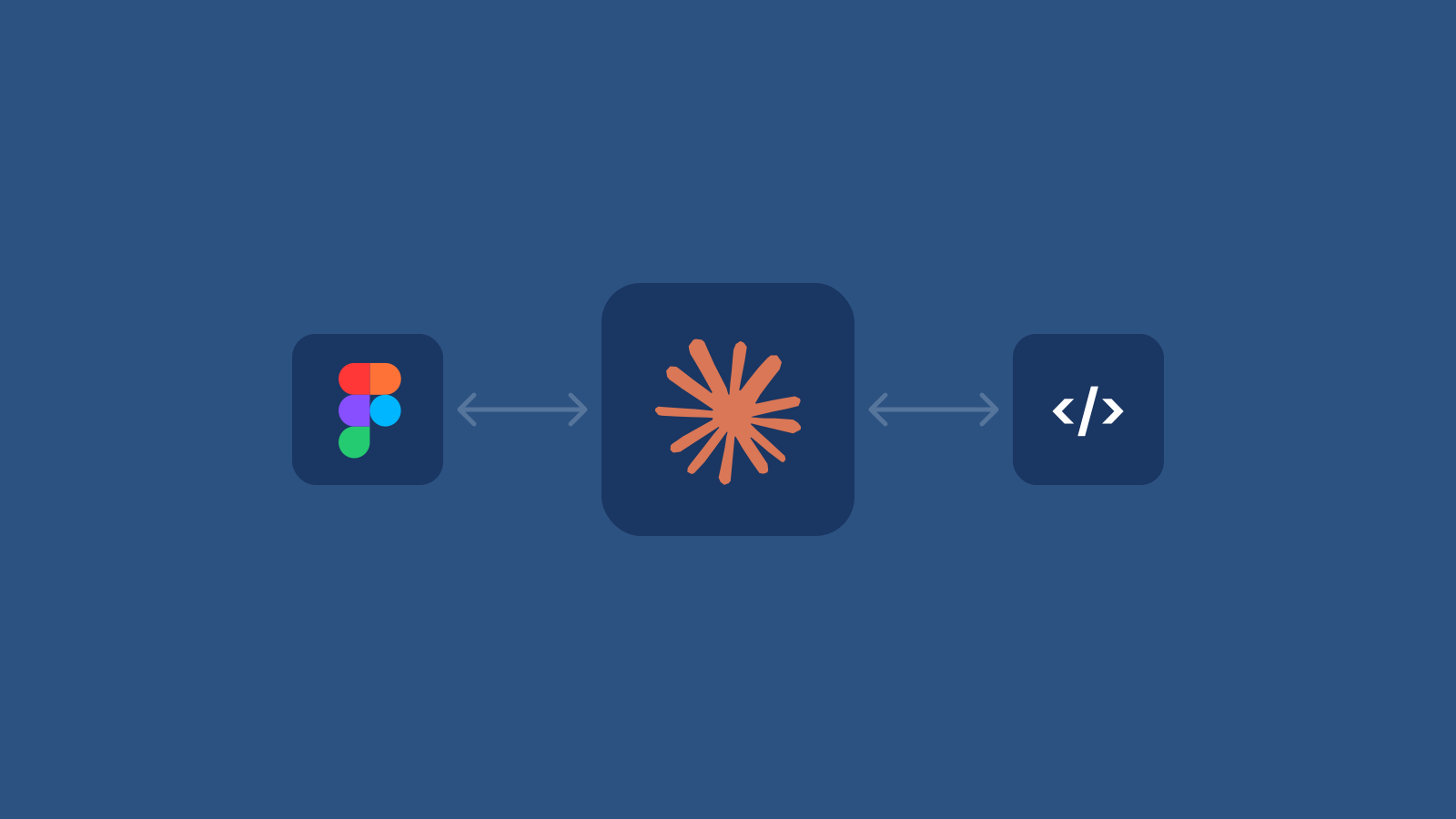
- Prototyping moved into code. Teams began using Claude to explore interaction ideas directly, pushing output back and forth with Figma for refinement and finalization. The prototyping loop was now a conversational design process. What would have taken eight hours through traditional methods was produced in two hours, with an additional five to six hours saved on interaction refinement. We discovered design gaps more quickly through this conversational work, compared to our old process.
- Design specifications became a delivery artifact. Designers now use Claude to generate markdown design specification files from their work. Those specs feed directly into PRD requirements and engineering tickets, compressing the handoff cycle and reducing the ambiguity that typically lives between design and engineering.
- Copy generation became systematic. We converted the Voice and Tone GPT into a Claude Skill, enabling consistent, on-brand copy generation across features. What had been a bottleneck became a first-pass quality gate any designer could run.
- Accessibility and design system compliance became continuous. AI-powered accessibility audits and design system token creation now run as part of the workflow, not as a separate QA step at the end. Code syncing with the design system reduces drift and catches inconsistencies earlier.
- This program was intentionally designed from day one. We quickly gained an increase in efficiency because of this deliberate approach.
- Every experiment was evaluated. We learned just as much from our failed experiments as we did from our successful ones. We incorporated these learnings into a Vibe Design Prototyping Guide, which established principles and guardrails for AI-assisted prototyping across the team.
- Human review and refinement is required. AI raised the floor on first drafts, but only when it was paired with the team's craft, judgment, and product intuition did the work meet our quality standards.
In 2025 most organizations approached AI adoption reactively, with individuals experimenting independently, no shared standards, no measurement, no codification of what works. We ran a structured program, measured it, built results into permanent practice, and shared it across the organization, resulting in a shared organizational capability while inspiring other teams to go on their own AI adoption journeys.