Defined how an organization thinks. Three journeys, four principles, five competencies, component library operating model.

The most important work is invisible. I researched and formalized three user journeys that became core to Muck Rack's product strategy and our North Star metrics. I authored four product principles which informed roadmap decisions and solution details. I defined five UX principles establishing shared quality standards and built a UX competency framework. Most recently, I began driving the component library program as a structured operating model. This foundation made everything else in my portfolio possible.
The most important work a design leader does is often invisible. Nobody writes a press release when you establish the principles that govern how a team makes decisions. Nobody charts adoption when you define how problems get framed. But without that foundational work, everything teams do is slower, less consistent, and more expensive to change.
This is the work that made everything else in this portfolio possible.
User Journeys
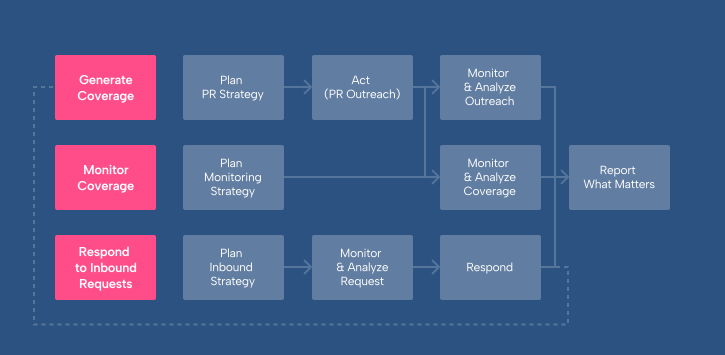
I researched and defined Muck Rack's three primary user journeys: Monitor Coverage, Generate Coverage, and Respond to Inbound Requests. The initial research started when I first arrived at Muck Rack and established the UX Research practice in 2022. I built a Miro board for each of the three journeys and conducted roadshow meetings with every software development team, marketing, and other cross-functional groups. The goal was clarity: get everyone aligned on what users are actually trying to accomplish, not what we think they're trying to accomplish.
The journeys were formalized in 2024 as the authoritative customer context framework and became the shared reference that aligned Product, Engineering, and GTM around a common understanding. They inform roadmap prioritization, onboarding design, and how the company talks about its product externally. Four years later, they're still the foundation for how Muck Rack thinks about its customers. More recently, I've added them as context files for teams using Claude for planning, so they're embedded in how we approach new problems.
Product Principles
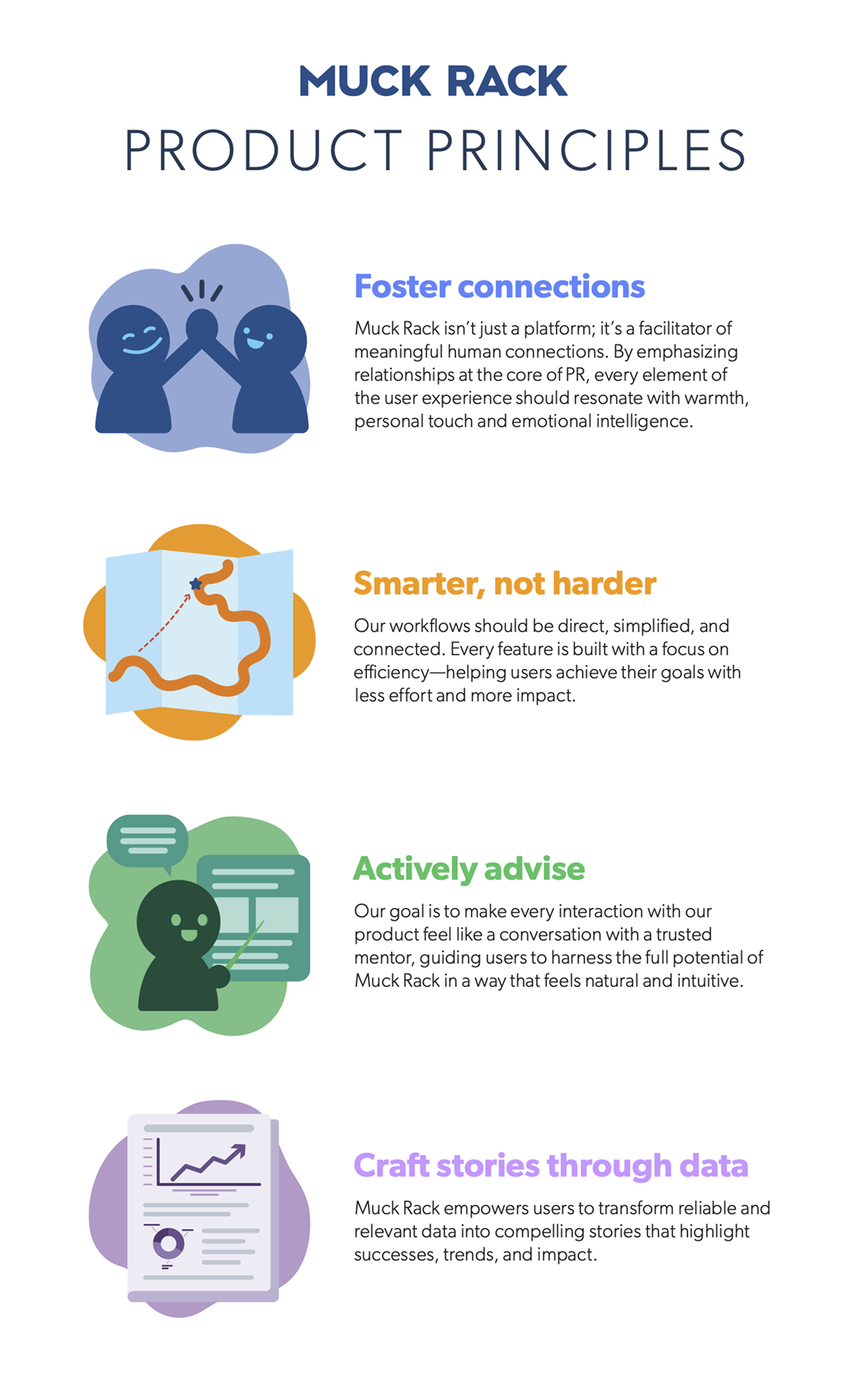
I independently authored Muck Rack's Product Principles as strategic guardrails that govern how the team evaluates ideas and makes tradeoffs: Foster Connections, Smarter Not Harder, Actively Advise, Craft Stories Through Data. These principles became the evaluative lens for opportunity documents, roadmap reviews, and product decisions across the organization. The fact that they're embedded in the Opportunity Engine prompt architecture is one concrete proof of how deeply they've been absorbed into how the team thinks.
UX Principles
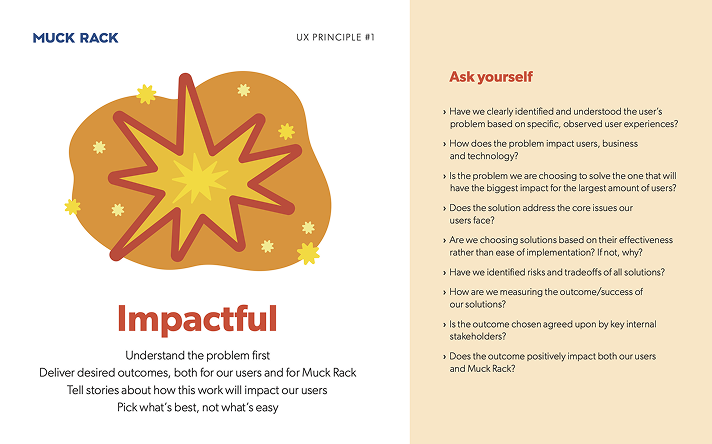
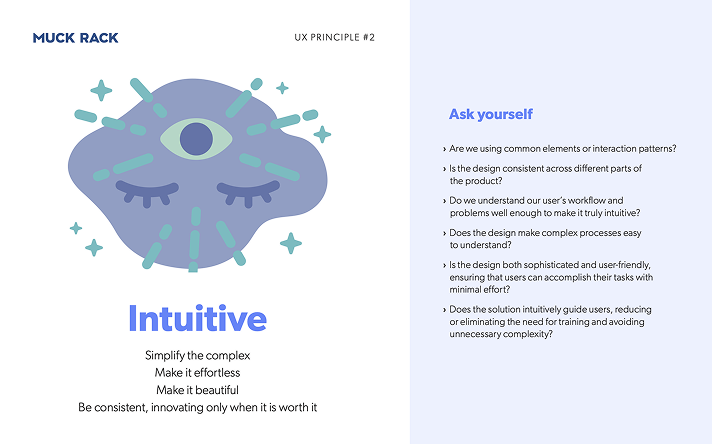
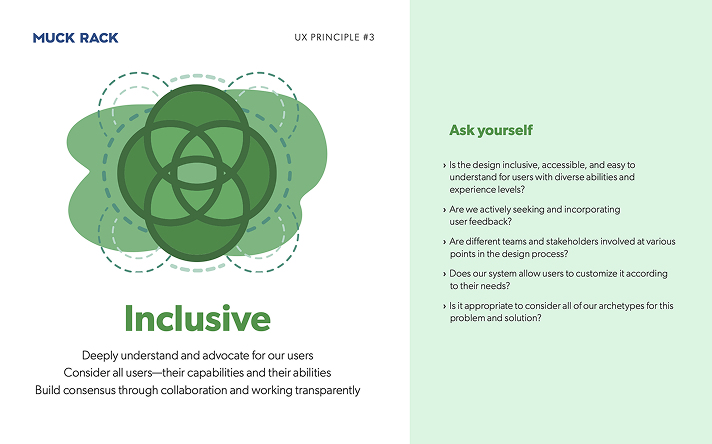
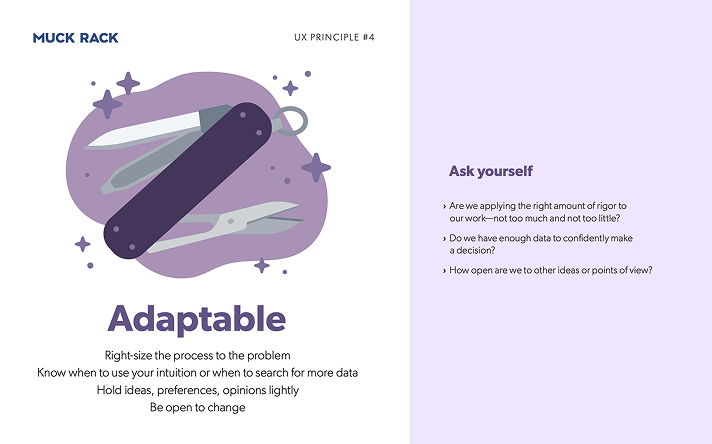
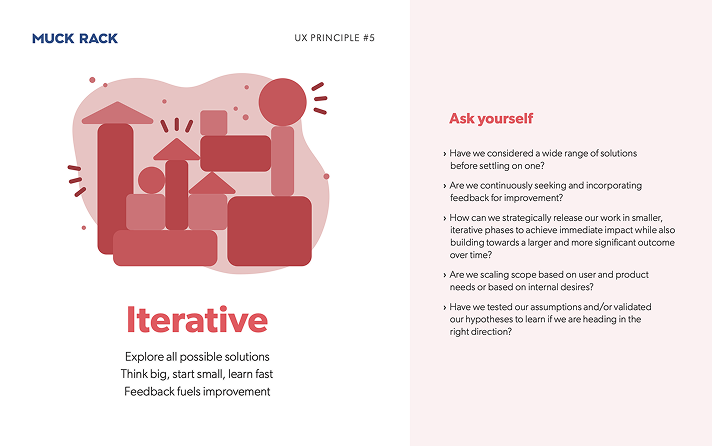
Separate from product principles, I defined how the UX team works, i.e., the standards, behaviors, and quality bar that govern how design is practiced at Muck Rack: Impactful, Intuitive, Inclusive, Adaptable, Iterative. These principles established a shared definition of good work that made critique, feedback, and decision-making faster and more consistent across a distributed UX team working simultaneously on multiple initiatives. They became the north star for design quality across the organization.
Metrics Definition
I co-led the definition of Muck Rack's North Star Metric and Product Objective Metrics across three product pillars. I also led the definition of initial user cohorts based on usage patterns: Manage Media Relations, Monitor Coverage, and Report on Impact. Each cohort had distinct needs and behaviors.
Product, Customer Education, and CX aligned on this segmentation model, which is now used for roadmap planning, onboarding design, and GTM strategy. These definitions changed how the company measured success and gave teams a shared language for what good outcomes look like.
UX Competency Framework
I defined the competencies that govern how UX team members are evaluated, developed, and promoted. This created a clear growth path for every role on the team and gave me a consistent basis for coaching, performance conversations, and hiring decisions.
The framework covers five competency areas: Research & Strategy, Design Execution, Collaboration & Communication, Product Thinking, and Craft & Evolution. Each competency has defined levels from Individual Contributor through Senior Director, with clear expectations at each level.
The impact was measurable: my team's engagement score is 91 versus a company average of 78, and an eNPS of 80 versus 40 company-wide. That reflects in part the clarity this framework created; people know what good looks like, how they're progressing, and what they're working toward.
Component Library Program
Through 2025, I directed the development of our Figma library alongside my Sr Product Designer. In early 2026, the component library became a more significant company priority, and I began to play a more active role in the broader program by taking lead on building the operating model across six tracks of work: token architecture; Figma library; component build; documentation; governance, contribution, and adoption; and AI acceleration.
I personally led the Governance and Contribution track: a four-tier contribution framework (Defect Fix, Small Enhancement, Large Enhancement, New Component), clear decision rights across design, product, and engineering (who decides scope vs. experience vs. implementation), an adoption playbook designed to meet teams where they are, and a metrics program tied to two OKR targets (a 20% velocity increase and a developer experience index score at or above 80).
The program launched in late February 2026 with a 30-day kickoff phase targeting token alignment, a first slice of core components end-to-end (Figma, Vue, documentation), and the publication of a single documentation home. By Q2 2026, we shipped the "Core 12" component set with full definition of done: tokens-only, all states implemented, accessibility verified, Storybook stories updated, GitHub documentation published, and release notes included.
Companies that deliver great products consistently do so because they create the conditions for good decisions. They have a shared language, clear principles and outcomes, and defined growth paths and operating models. My work above shows I can drive this type of foundational work required to make great strategy and design possible with speed and at scale.