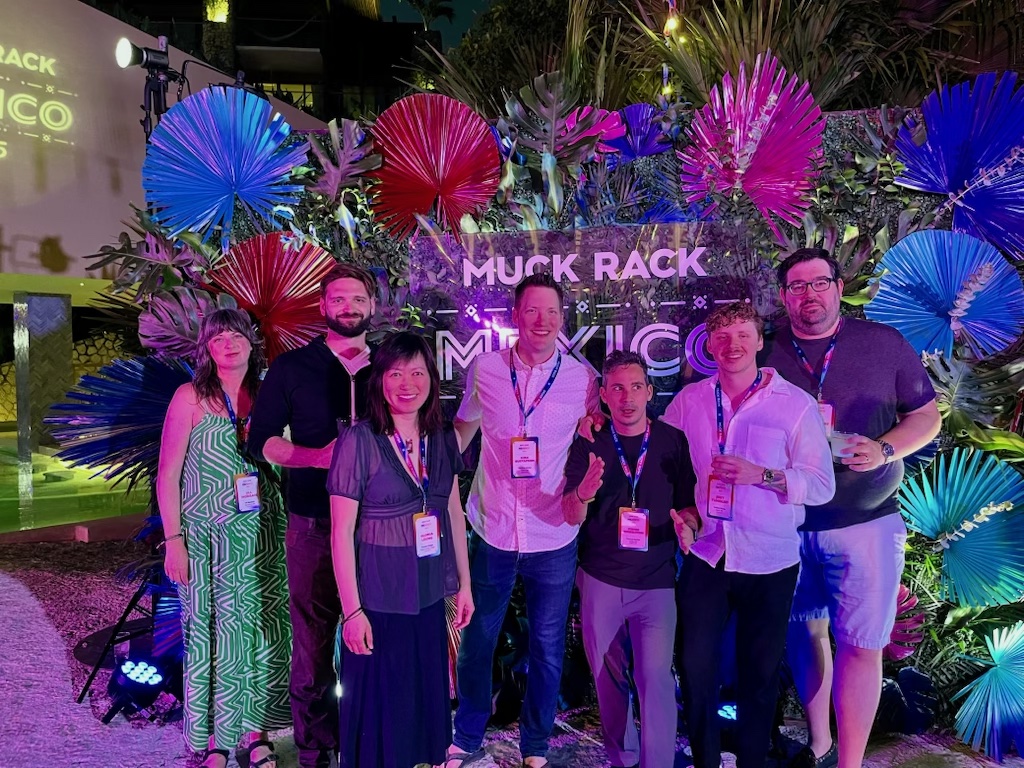
I ship the work while building and maturing the team around it.
I’ve led design at three kinds of companies: agency, startup, and growth-stage SaaS. I prototype in code and direct the design personally, all while contributing to product strategy.
I believe there is no perfect process: the right approach changes by situation. When the problem and solution are already clear, jumping straight to code with a tool like Claude can be the right move. Often the problem is not clear and that’s where my greatest strength comes into play: making an abstract strategy concrete and connecting it to the business’s success metrics before we explore solutions. I see my job as central to reducing the risk and cost of being wrong and to help teams get to the right answer faster.
- Generative Pulse: concept to shipped in six weeks, 199 pre-launch leads, 39 demos in week one, G2 Leader by year end.
- Opportunity Engine: won Muck Rack’s company-wide Biggest Business Impact award.
- Media List Uploader: cut editorial upload requests 73%, saving an estimated $115K a year.
- Personalized homepage: held 96% retention when leadership considered reverting it.
- $15.75M in revenue impact in 2025, contributing to 2.55x ARR growth over my Muck Rack tenure.
- Started rebuilding the team’s practice around AI in June 2025, before most design teams were touching AI tooling: 57 structured experiments folded into how we operate permanently, plus the governance model behind Muck Rack’s Design System.
- Built design functions from scratch at every company: one designer to five at Lipman Hearne, zero to twelve at EmployBridge, two people to a full discipline (UX Research, Content, Product Design) at Muck Rack.
- Team engagement hit 91 against a company average of 78, eNPS 80 against 40 company-wide, while shipping 49 features in a year that included an unexpected departure.
- Building the design function at Cardwell from scratch right now, as a team of one; rebuilt the company’s design system myself, shipped as a versioned package in about five weeks.
I’m looking for my next place to build a great product and build or mature how a company thinks about design’s role, where design is not just an execution arm of product, but has real input into what user and business problems we solve. If that sounds like a fit, I’d love to talk.