First-to-market AI category. 199 leads, 139 upgrades, G2 Leader status in 6 months.

When a new market category has zero competitors, speed to market is critical. I had a 1-day deadline to align leadership on a concept, 2 weeks of research happening in parallel, and no competitor in the space. I owned the UX strategy, research direction, and aspects of GTM. Result: we launched in 6 weeks, defined a category competitors copied, and I proposed 9 post-launch features to extend the lead, 8 of which ultimately shipped.
Muck Rack helps PR teams monitor press coverage, pitch journalists, and manage media relationships at scale. As AI-powered search tools like ChatGPT, Gemini, and Perplexity began influencing brand perception, PR teams realized they had no visibility into how these LLMs described their brands or clients. Were they showing up at all? What sources was the AI citing? Were key messages being picked up? And there wasn't a solution in the market to help teams find the answers to these questions.
Muck Rack's unique advantage was its journalist data. By matching our media database against the sources cited in LLM responses, we could surface which journalists and outlets were influencing AI-generated results. We could then help PR teams optimize their media strategy around these AI-driven channels. But the category, Generative Engine Optimization, was so new that not only did our competitors not have a solution in market, but our customers didn't yet fully understand why they needed it and how it made the work of Communications and Public Relations teams more important.
In June 2025, leadership set a late July launch date around an embargoed press story before we even started scoping the work or understanding the shape of what we needed to deliver.
Concept (Day 1)
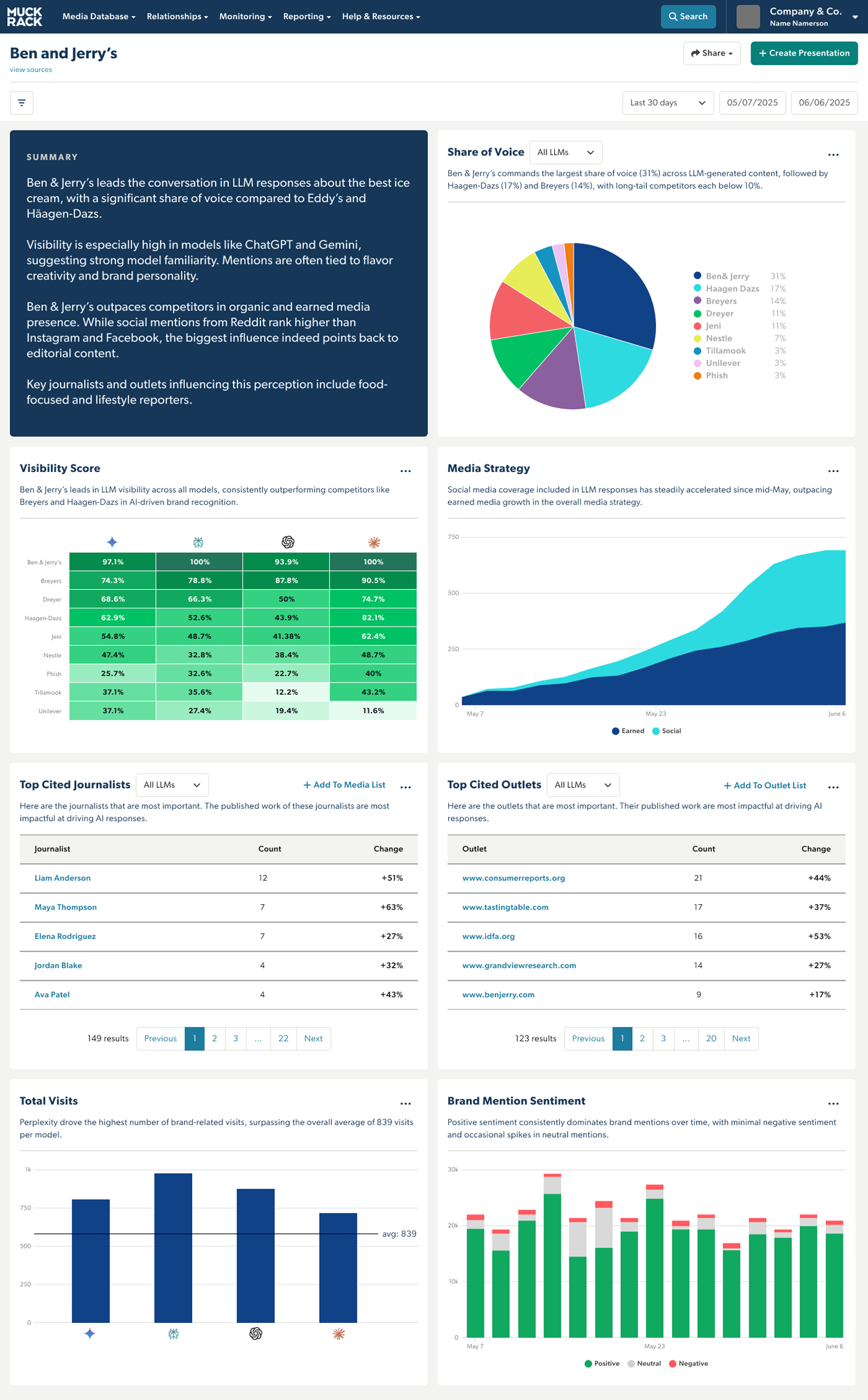
In order to hit our deadline, I had one day to align leadership on a concept so we could lock in scope. I designed a high-fidelity Figma prototype showing what a Generative Pulse report would deliver: an executive summary of how LLMs described the brand, share of voice across AI platforms, a visibility score, breakdown of earned vs. social sources, top cited journalists and outlets, brand sentiment analysis, and total visits from LLM referrals. The prototype showed how GEO could be fully integrated into a key strategic media planning tool in Muck Rack's product line and not just a beta feature.
Leadership bought into this concept and gave us approval to keep moving.
Research (Weeks 2–3, Concurrent with Design)
While I refined the design concept, I also directed a research program: six customer interviews (3 brand teams, 3 agencies) and four internal sessions (Sales, Customer Success, PR/Comms team).
The research revealed something crucial: participants understood GEO conceptually (4–5 out of 5 value rating, one called it "7 out of 5" for market relevance), but they were just beginning to know how to use it. The must-have features were clear (Summary, Share of Voice, Top Journalists, Top Outlets), but participants also asked for deeper drill-down and period-over-period tracking to prove the impact of their AI influencing efforts over time.
More importantly, research exposed two risks: one agency partner's confidence dropped from 5 to 1 when confronted with data accuracy concerns. More extensive than typical education and enablement became a must-have for post-launch.
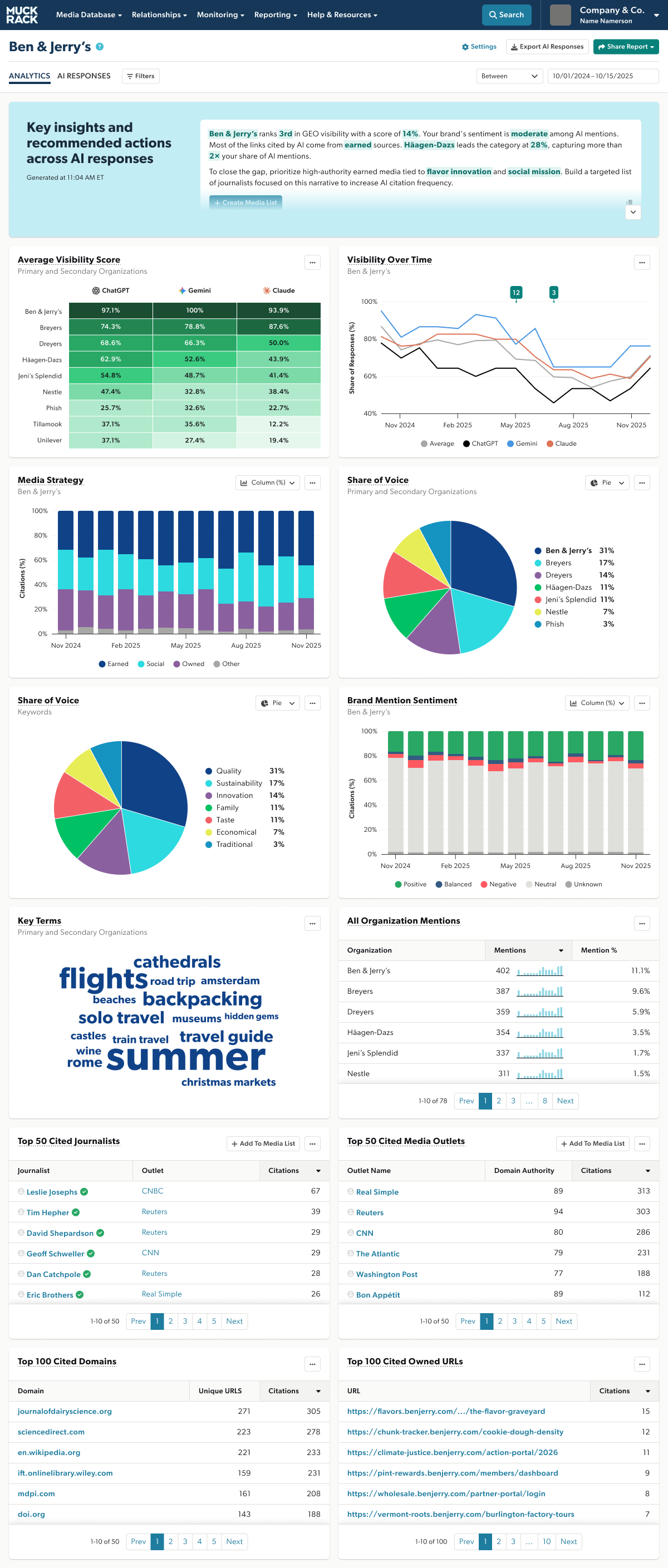
We changed scope based on what we heard and after conversations with our Engineer team. Features like "Media Strategy," "Visibility Score," and "Brand Mention Sentiment" moved to post-MVP. Drill-down and reporting integrations were deferred. We documented risks related to deferment and ensured this work was added to the roadmap.
Brand & Microsite (Weeks 2–4)
I designed the Generative Pulse microsite from wireframes through QA, overseeing the build. I collaborated on the Generative Pulse signature/logo, defined the visual language, and created a GTM communication guide for our marketing team that addressed the needs of different audience segments (GEO-savvy vs. new to GEO), with sample topics, formats, and cadence recommendations.
Post-Launch Roadmap (Weeks 5–6)
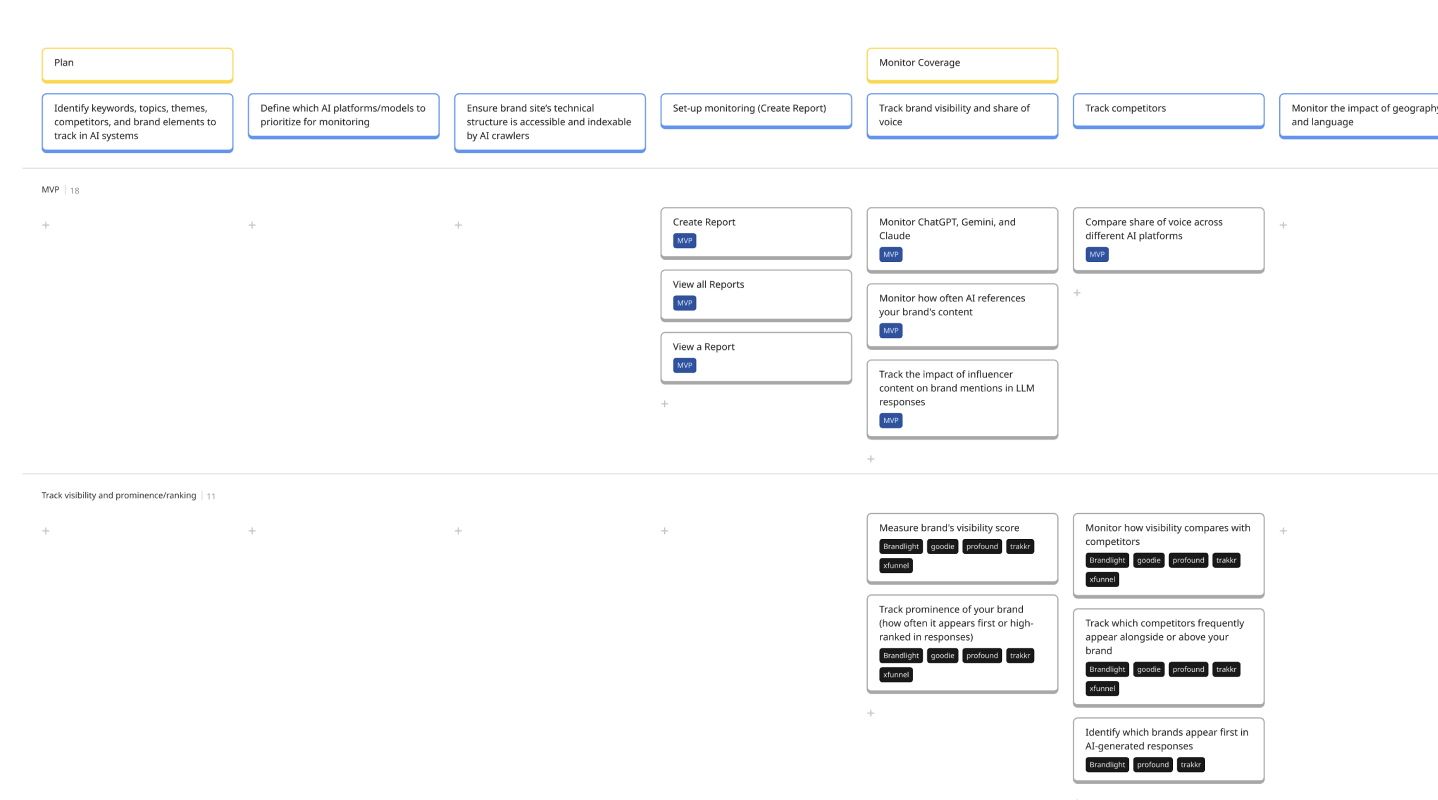
Following a competitive review of some early GEO products, I proposed a prioritized nine-initiative roadmap addressing recurring user requests around visibility tracking over time, competitive analysis, sentiment monitoring, integrations with analytics tools, report sharing, and deeper drill-down capabilities. Each initiative mapped to user needs, competitive positioning, and implementation effort. Eight of these nine have subsequently been released.
Most UX leaders are handed a pre-framed problem. The work here was owning and delivering on an unstructured problem under real constraints, running research without using those constraints as an excuse, and thinking past the MVP launch to what the product needed to become next.