6 weeks. 3 user narratives. A validated prototype and a new workshop technique that spread across the organization.

Rolls Royce's Nuclear Division needed a unified SaaS platform to consolidate separate maintenance, supply chain, and inventory services for nuclear utilities. It was 2018 when remote product development collaboration was an unsolved problem and our six-person cross-functional team (UX, research, data science, and program management) needed to work across time zones with a remote client. I served as both UX lead and product manager for the engagement, drove all client engagement and workshops, co-developed a virtual whiteboard technique that became a formal addition to the Uptake UX team's toolkit, and delivered a fully interactive prototype validated by Rolls Royce Nuclear executives. Although the contract wasn't renewed due to budget reasons, the method I developed was.
If maintenance work at nuclear utilities happens too early, it wastes budget. If it happens too late, it creates safety and regulatory risk. Rolls Royce's Nuclear Division wanted us to help them find this balance and optimize their maintenance work.
They approached Uptake with a SaaS partnership: combine several separate services (maintenance planning, supply chain management, obsolescence tracking, inventory) into a single platform that would help utilities perform the right work at the right time at the right price. The business case was defined so our challenge was to define what that product actually was.
We had six weeks define the product and test an interactive prototype. Our client was remote which presented an additional challenge since it was 2018, before COVID normalized distributed collaboration, before Figma multiplayer existed, before Miro was standard practice. We had to work across time zones with no shared digital canvas and a design system we couldn't deviate from.
Three constraints shaped our approach.
The first was time: six weeks to define strategy, gather requirements, design, and validate. The second was scope: Uptake's existing design system was the foundation. We could extend it (and did, with a dark theme the client requested to match their existing software environment), but we couldn't introduce new patterns or invent new visual treatments from scratch. The third was distance: the client was remote and the tooling that makes remote collaboration intuitive today didn't exist yet.
The design system constraint helped us focus because we could direct creative energy toward architecture, narrative, and the user tasks the product had to support.
Workshop: Empathy Mapping and Requirements (Days 1–2)
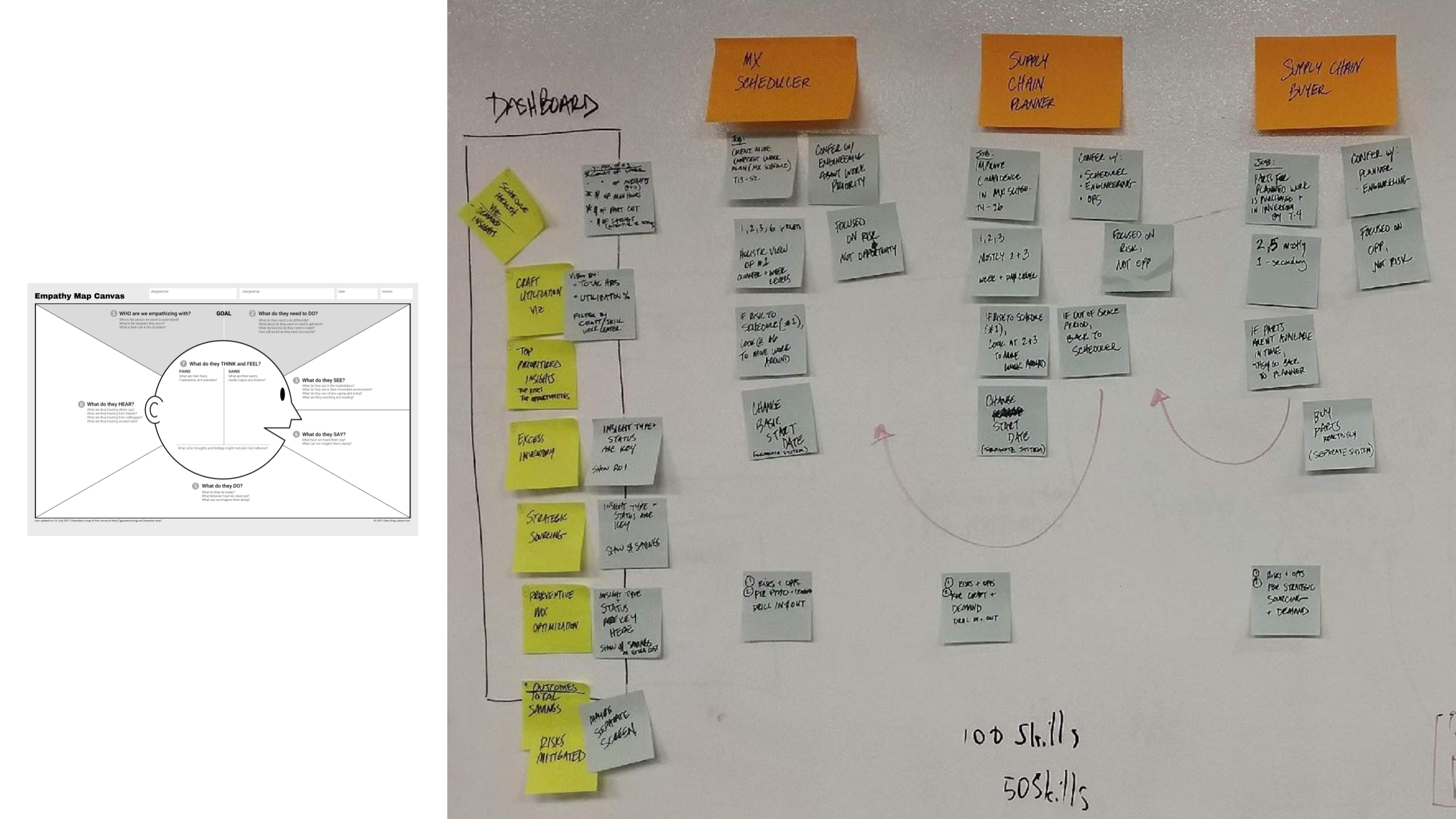
We opened a two-day on-site workshop with empathy mapping to establish shared understanding of who we were designing for. Nuclear utility software is often built around systems (SAP, Maximo) rather than people. We wanted to ground the work in jobs, goals, and the daily pressure each role was navigating before we ever touched a requirement.
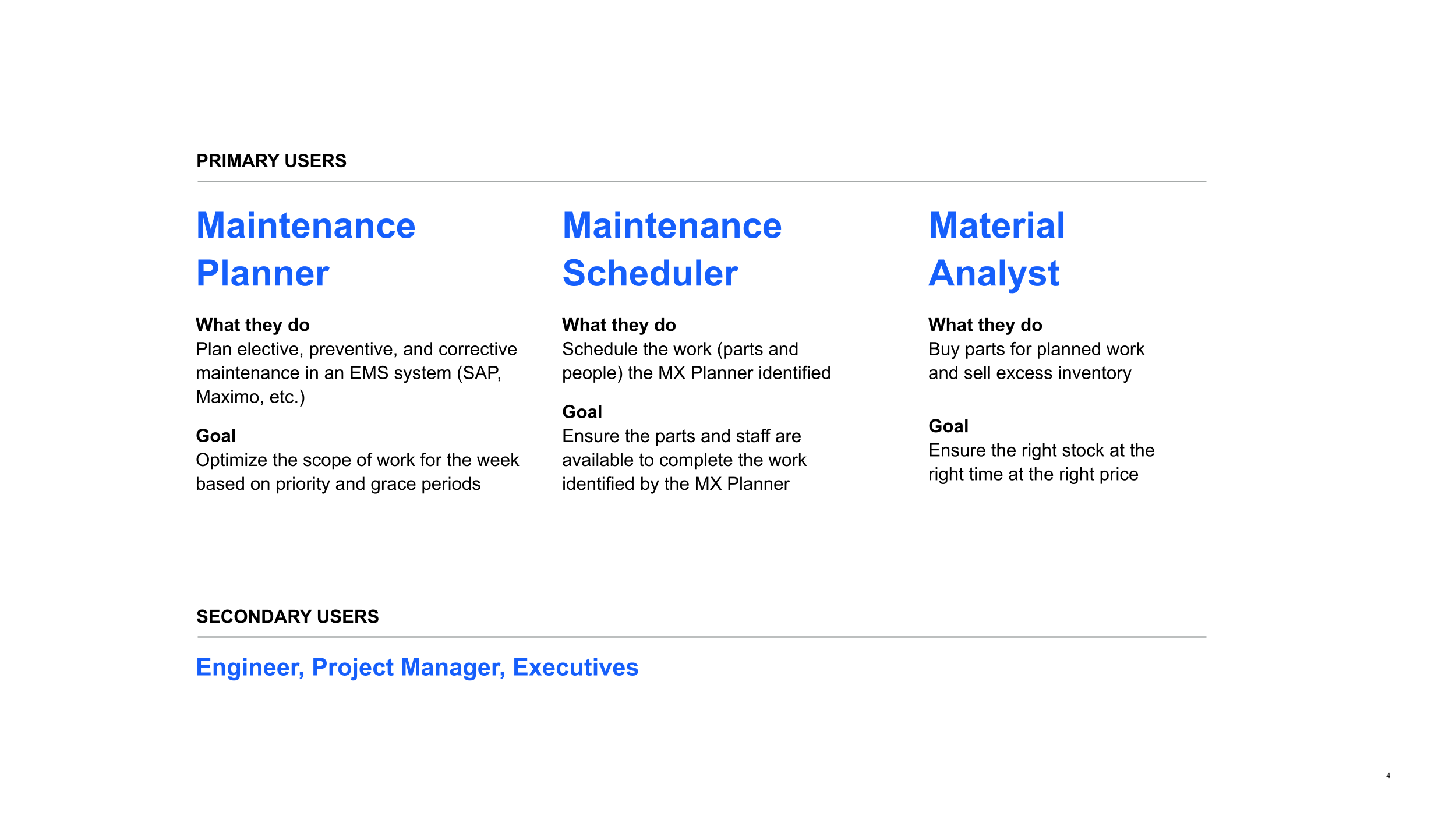
Three primary users emerged.
- Maintenance Planner: Plans elective, preventive, and corrective maintenance in an EMS system. Their goal: optimize scope of work for the week based on priority and grace periods. This is where cost and safety tension lives most directly. A grace period deferred too long becomes a compliance issue and a grace period acted on too early is budget waste.
- Maintenance Scheduler: Schedules the parts and people identified by the Planner. Their goal: ensure parts and staff are available to complete the identified and committed to work. A plan without parts is a missed commitment.
- Material Analyst: Buys parts for planned work and sells excess inventory. Their goal: ensure the right stock at the right time at the right price.
Secondary users included Engineers, Project Managers, and Executives.
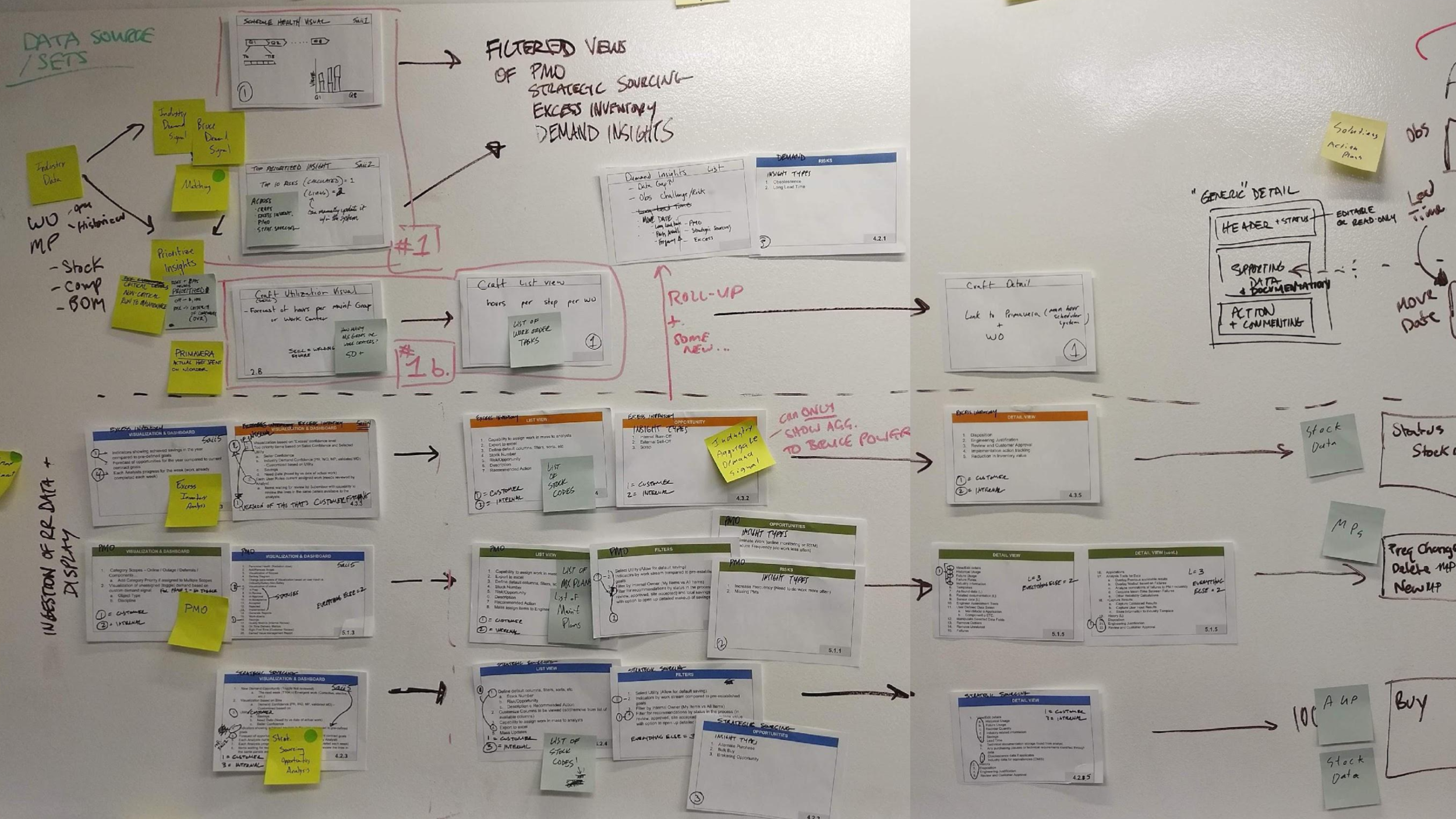
With user definitions aligned, we moved directly into requirements mapping: connecting Rolls Royce's functional requirements to the specific moments in each user's workflow where those capabilities were needed the most. Our workshop helped us translate our users’ needs into a high-level experience while we also defined specific business logic for the platform.
By the end of day two, we had alignment on user definitions, rough JTBD, capability areas, and a mapped requirements foundation the prototype could build from.
Virtual Whiteboard Sessions
The remote requirements work introduced the biggest creative challenge: how do you iterate visually with a client when you can't share a canvas?
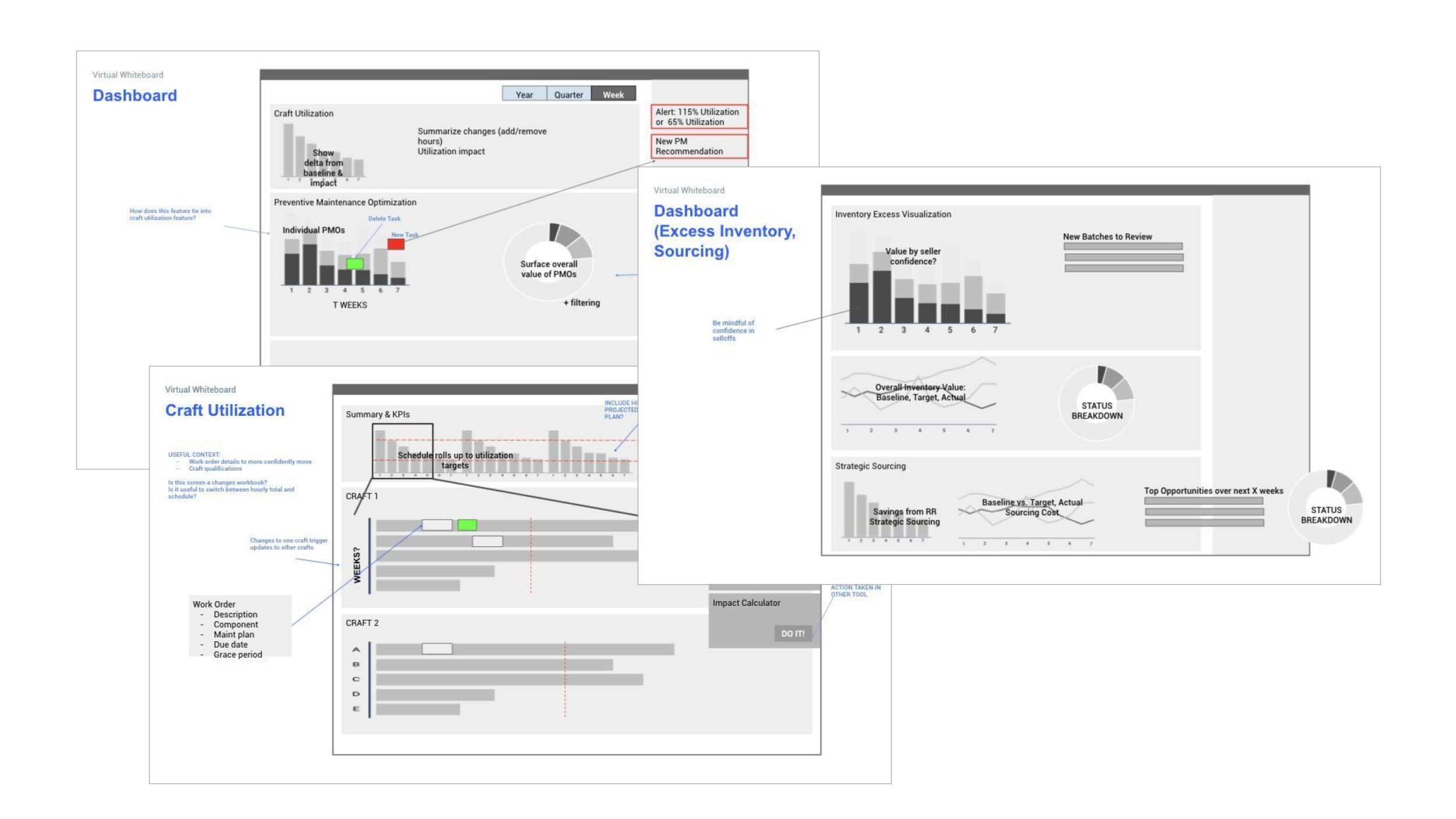
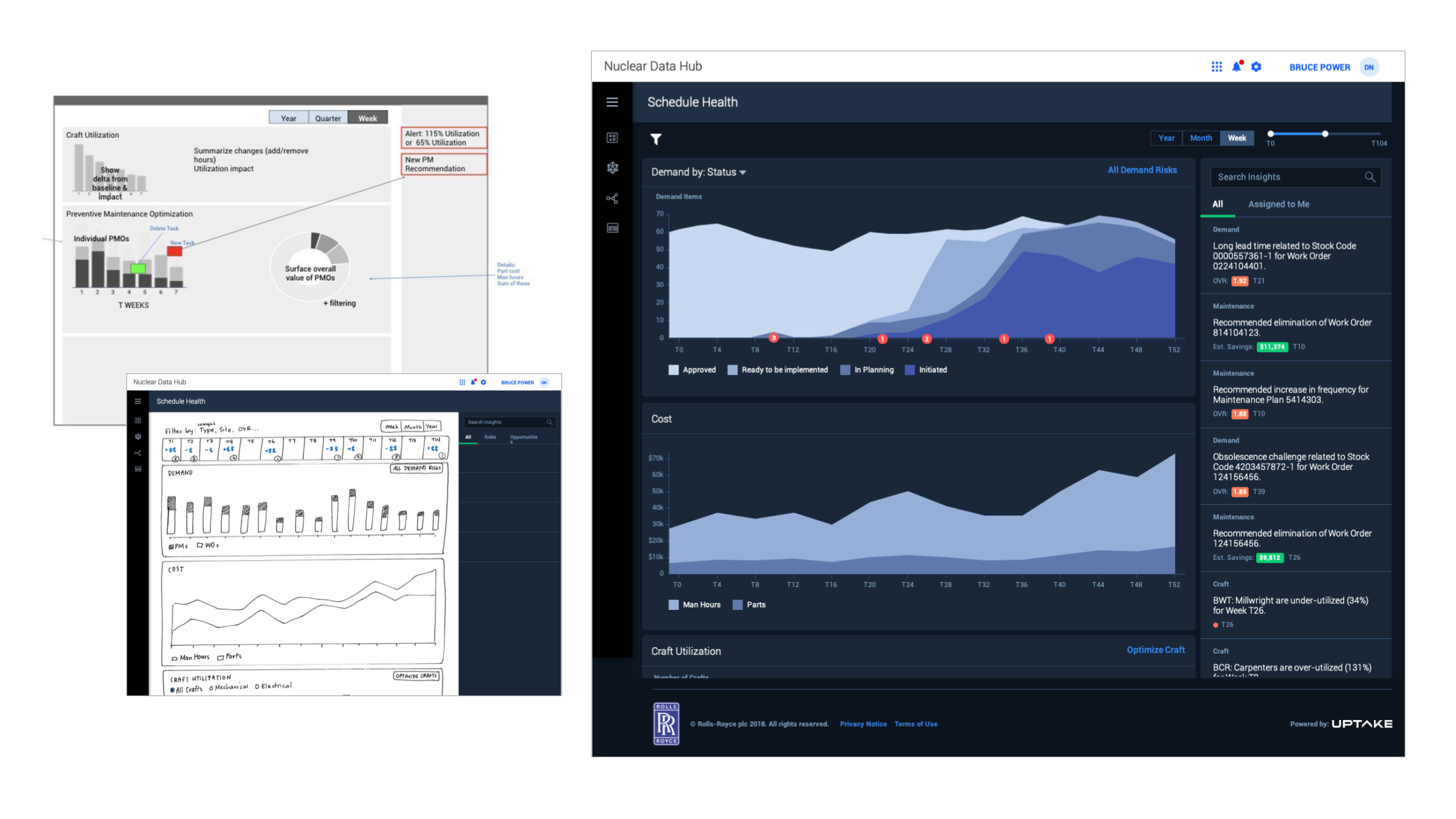
I developed an approach Uptake hadn't used before which I called Virtual Whiteboard. During three 2-hour remote sessions, I facilitated a conversation with our customer while an Interaction Designer sketched directly in Google Slides, building rough visual concepts in real time as we discussed each feature or use case. The sketches weren't meant to be polished. They were meant to be fast enough to drive discussion and make decisions. Seeing a rough layout of a concept on screen changed the quality of the feedback immediately. Clients could say "that's not quite it" or "yes, but what if the priority column was here" in a way that's impossible with words alone.
The technique was formally recognized at an Uptake UX team All Hands and then adopted by several other teams across the organization.
Design Iteration
Over the following weeks, we held remote and in-person weekly design reviews and iteration sessions. The Virtual Whiteboard sketches evolved into pencil sketches, then into a low-fidelity interactive prototype in Axure, then into a fully interactive, dark-theme prototype we could put in front of users.
Rolls Royce requested the dark theme to align with the software environment their users already worked in.
Three Narratives
- A Maintenance Planner identifies a demand and takes action, navigating the tension between safety-critical timelines and cost optimization.
- A Material Analyst identifies and approves an excess inventory opportunity.
- A Project Manager or Executive reviews platform effectiveness and value metrics.
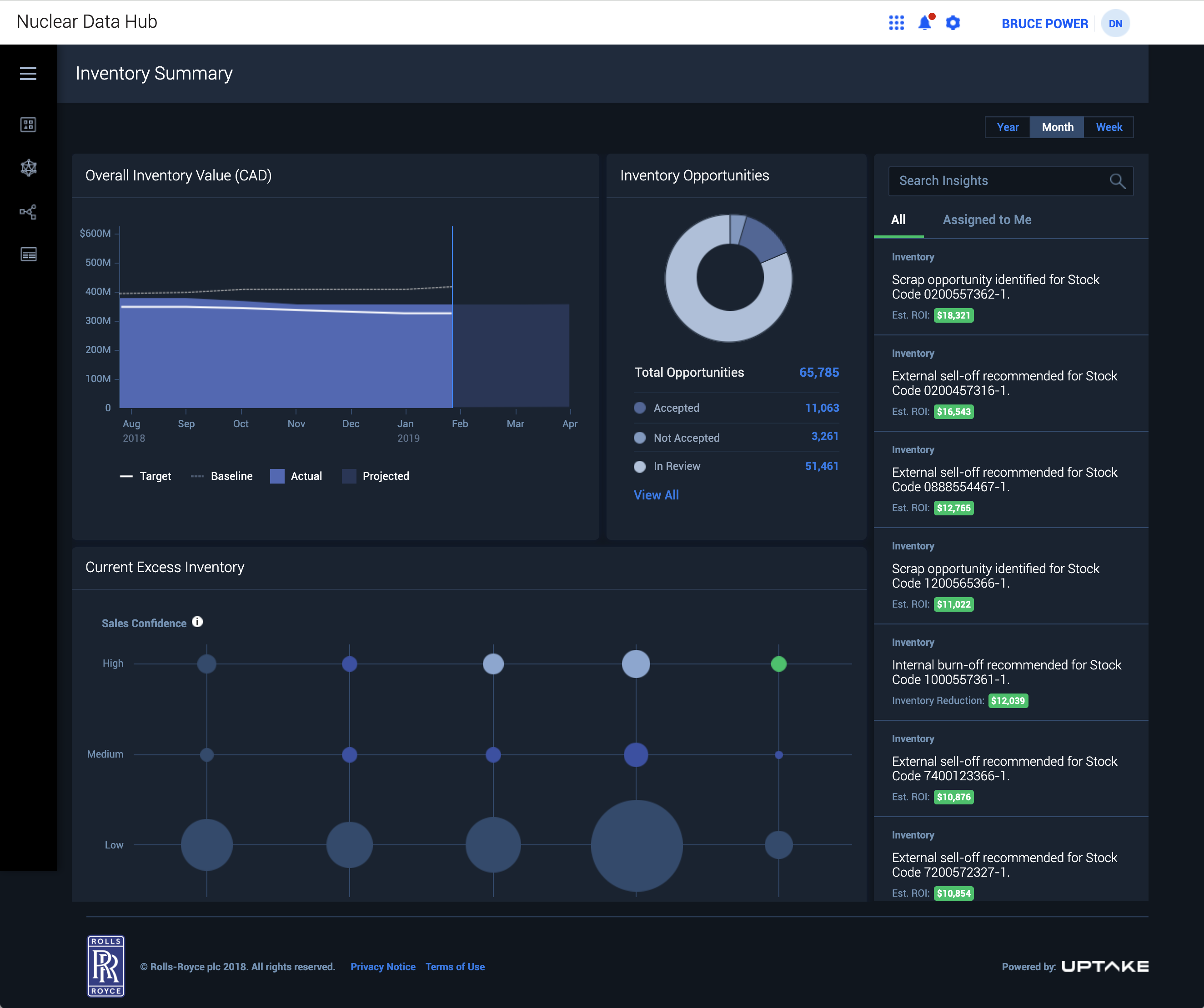
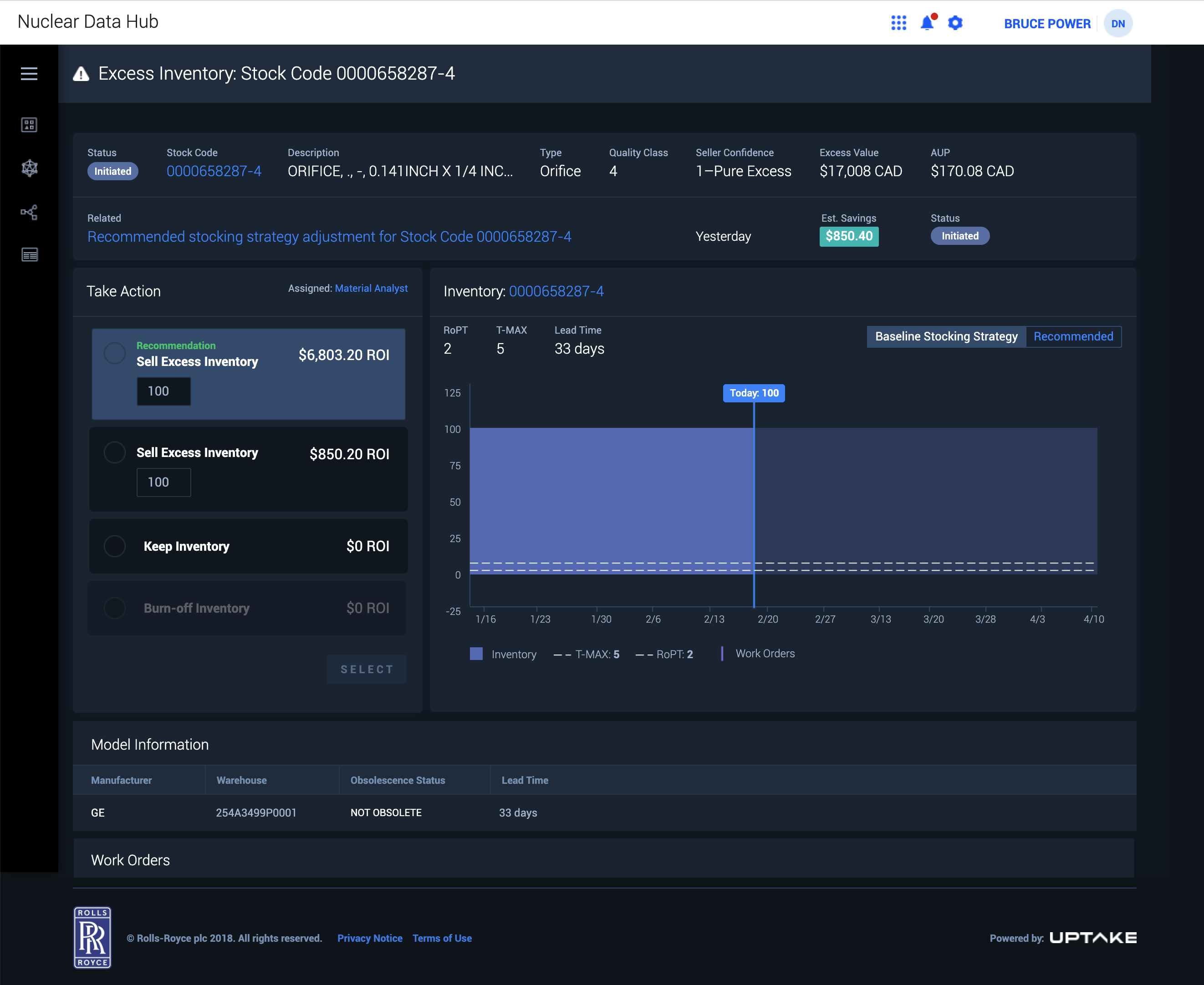
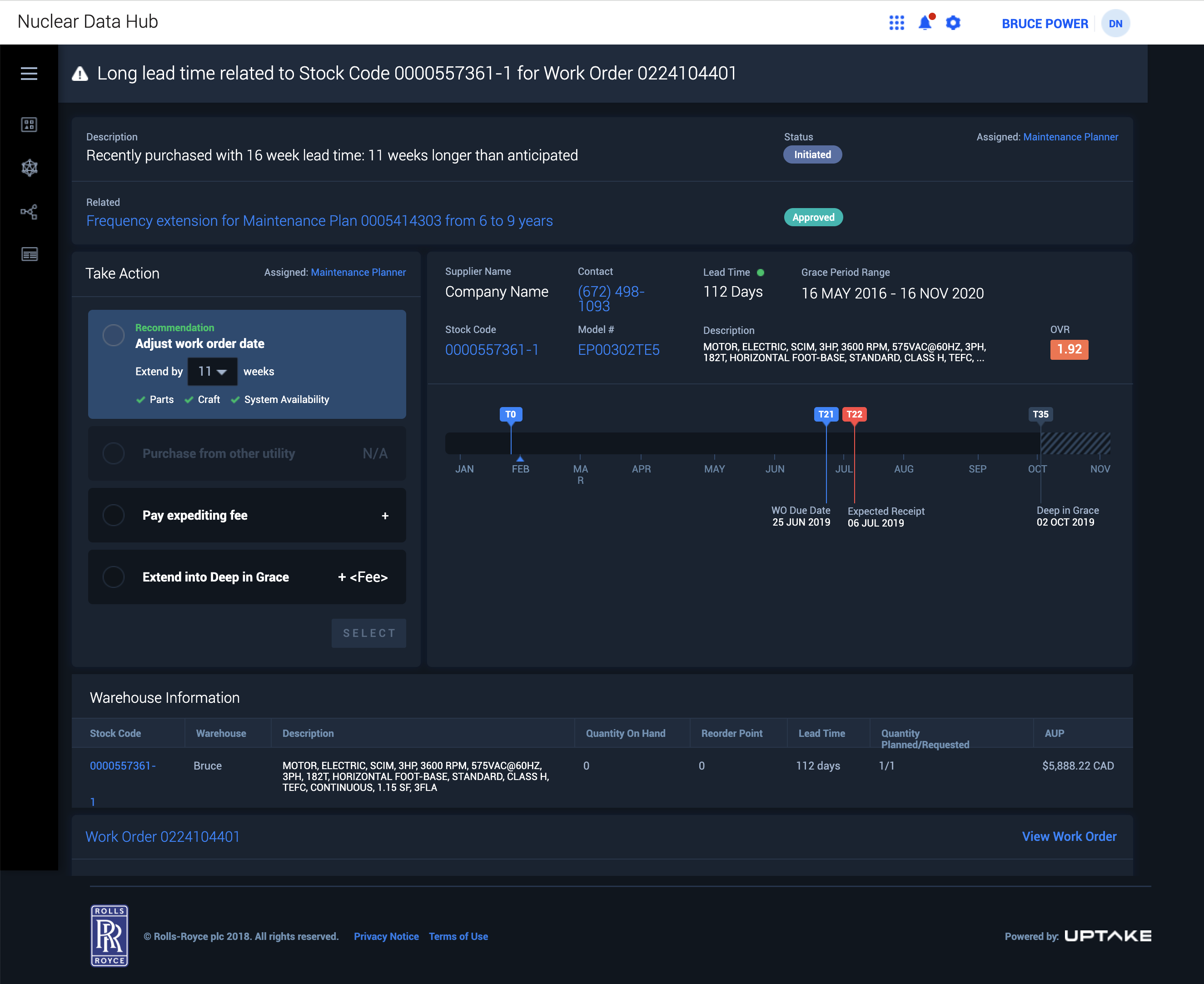
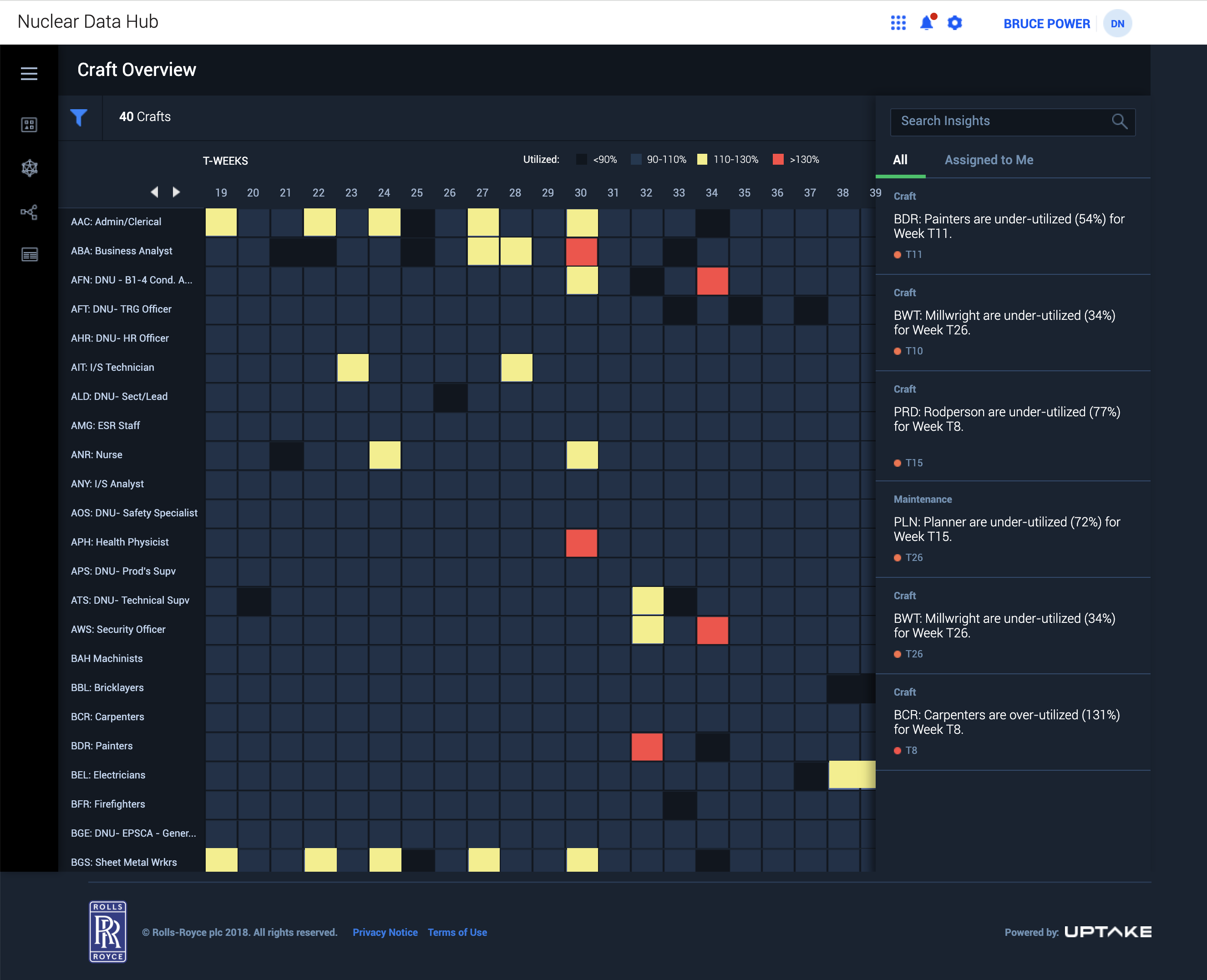
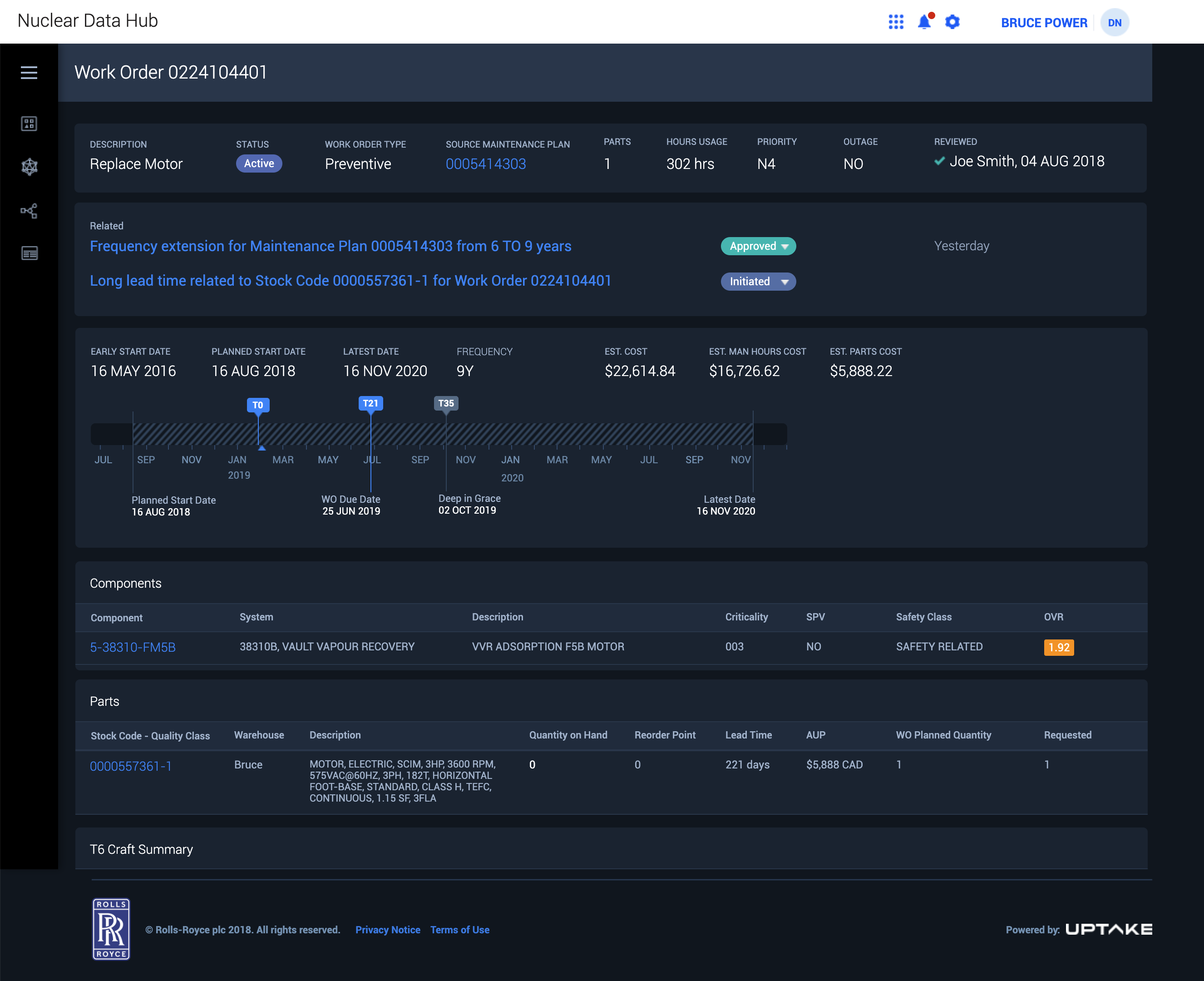
The prototype was ready for end-user and executive validation when the client contract wasn't renewed due to budgetary reasons so we unfortunately were not able to test it with our maintenance planners and techs.
What continued: the Virtual Whiteboard technique which was formally recognized and adopted across multiple Uptake project teams after this engagement.
Remote collaboration is a solved problem now, but it wasn’t in 2018. The Virtual Whiteboard worked because it respected how people actually process visual information: people need to see something, even if it is rough, to know what they actually think so you can make decisions. In our nuclear context, this mattered more than usual given the safety and regulatory consequences and risks involved. Our design process was critical for us to quickly explore, define, and align on the product strategy and solution.